Cardiovascular diseases and associated complications are the leading cause of death worldwide, accounting for 19.8 million deaths in 2022, or 32% of global mortality rates1.

Cardiometabolism and Venous Diseases
Cardiometabolism and Venous Diseases
Over 70 years of unwavering commitment
At Servier, our focus is on driving innovation to transform the lives of people affected by chronic conditions, including cardiovascular, metabolic, and venous diseases. We have recognized expertise in these areas and continue to invest in ways to serve patients.
For over 70 years now, we have been committed to this cause.
Where do we focus our efforts?
Cardiovascular, metabolic, and venous diseases (CMVD) are a major public health issue. Many patients face not just one disease, but multiple CMVD-related conditions. And even though treatments are available, far too many patients struggle to follow their prescribed treatment plans to the letter.

Did you know?
Innovation in cardiometabolism
In R&D, our teams endeavor daily to advance the development of medicines in areas where patient needs have not yet been adequately addressed. Our focus is on transformative medicine projects.
Our efforts in cardiometabolism are concentrated on treatment adherence and managing cardiovascular risk factors such as hypertension, diabetes, and dyslipidemia. In this way, we can leverage our existing medicines and expertise in incremental innovation. In particular, we are developing Single Pill Combinations (SPCs), which combine several fixed-dose medicines in a single tablet, designed to simplify daily medication intake. SPCs promote better compliance with prescribed treatment plans so that risk factors can be controlled, thereby significantly transforming how patients are cared for by medical professionals.
12
As of February 2026, we have 12 clinical development projects in our cardiometabolism & venous diseases pipeline
(Single Pill Combinations and New Formulations)

Tackling treatment adherence head-on
Adherence to chronic treatment plans has become a key issue in the health care sector. Despite the availability of a wide range of therapeutic solutions, non-compliance is very common and can have a significant impact on patient health. At Servier, we take this concern very seriously. We firmly believe that treatment adherence is key to treating patients and improving their care, and that this constitutes an unmet medical need4.
Did you know?
On March 27, 2025, the World Heart Federation, along with Servier and 14 partner institutions, launched the first World Adherence Day.
We place particular emphasis on three key areas:
Therapeutic adherence: Servier is committed to making a difference!
As a member of the Innovative Medicines Initiative (IMI) consortium, we are participating in a project designed to identify typical patient behaviors in order to propose tailored solutions that improve treatment adherence: “BEAMER,” for Behavioral and Adherence Model for improving quality, health outcomes and cost-Effectiveness of healthcaRe. This project was launched in 2021 and will run for five years.
The goal is to identify patient behavior patterns so that appropriate solutions can be provided to improve compliance with treatment.
By patients’ side
Explore our in-depth articles
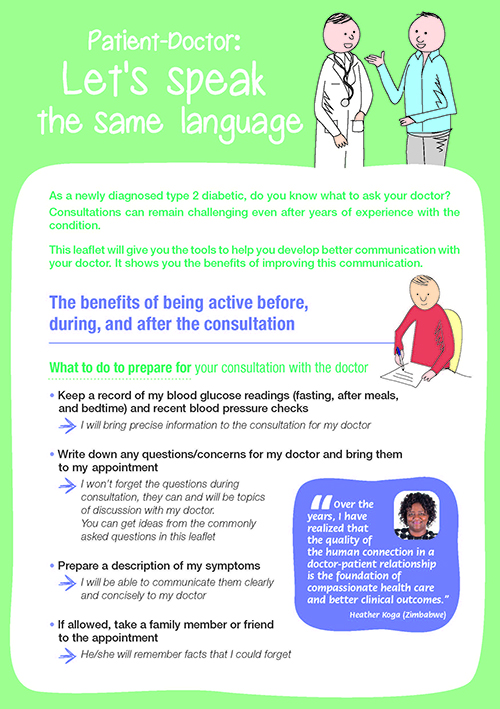
Type 2 diabetes: A brochure that helps improve communication between patients and doctors
Co-designed with patient representatives from different countries, the “Patient-Doctor: Speaking the Same Language” brochure provides type 2 diabetes patients around the world with information and advice on how to better communicate with their health care provider.
Got a question?
Want to report a side effect?
Check out our Pharmacovigilance page.