A fight for life
Everything happened very quickly after that – CT scan, MRI, and surgery exactly one week later. The local hospital, where the tests were carried out, referred him to a larger medical center for surgery.
However, when Dirk was discharged, he wasn’t given any information. The only instructions were to see an oncologist, who would monitor his progress. “The results were shared with us three weeks later by a doctor who had to get the details over the phone from his colleague. We were completely shocked”, he recalls.
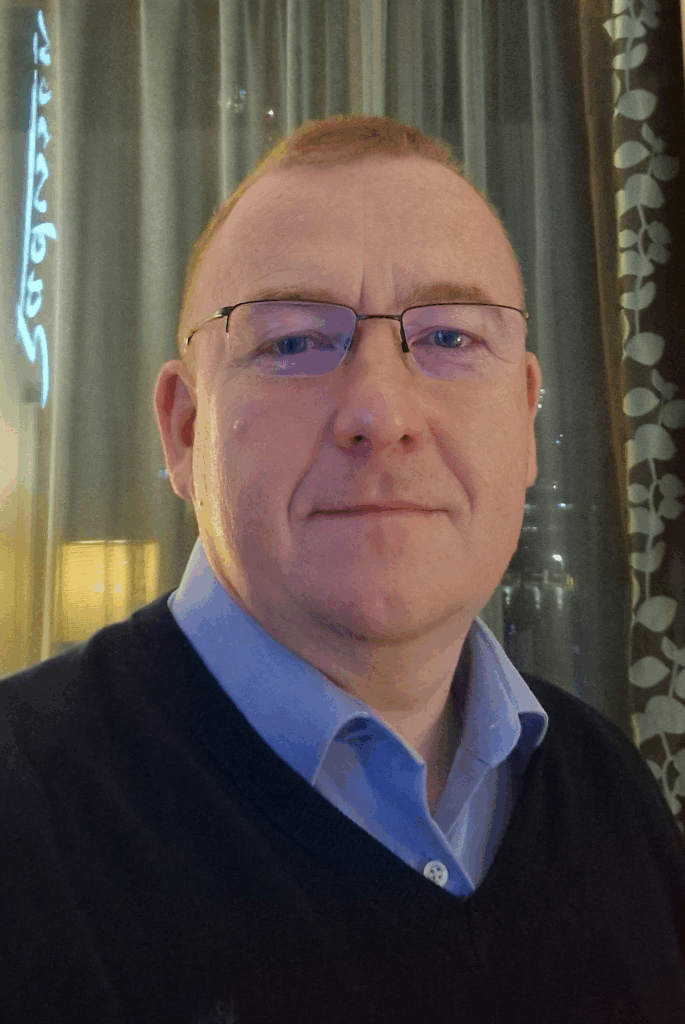
“I didn’t really have any symptoms, just a few headaches from time to time. But in 2019, I had an epileptic seizure and that’s when it all started.”
Dirk then underwent six weeks of radiotherapy and twelve months of oral chemotherapy, which he tolerated well. Since then, he has regular monitoring with an MRI every three months at the University Hospital in Düsseldorf. This schedule is expected to continue for the rest of his life. For his loved ones, it is a relief.
Although Dirk is not yet in complete remission, the progress is positive. “I lost my sister to non-Hodgkin’s lymphoma, which spread to all her organs, so my parents were afraid of losing their last child. But in December, it will be five years for me since it all began”, he says.
Read our insight: Glioma, a rare, aggressive brain tumor
Finding a new balance
In their daily life, his wife, a nurse, provides invaluable support. She deciphers medical reports, manages appointments, and navigates decisions that are sometimes far from transparent.
On the professional side, Dirk returned to work six months after his operation, working remotely with the support of his employer and occupational physician. His only regret is having to give up high-intensity sports, such as volleyball and soccer, to avoid the risk of seizure. Isolated in a remote village with no public transportation, he also depends on treatment that is not always easy to get.
Nevertheless, life has returned to normal, albeit a different normal. He confides: “I don’t show my emotions like I used to. I have trouble crying. Maybe it’s a side effect of the radiotherapy”.
The couple’s daughters, who were 7 and 10 years old at the time of diagnosis, have also been affected by the illness, naturally. To help them cope with the situation and give them a space to talk and share, the couple called on a local support team who has been a tremendous help.
Turning adversity into commitment
These days, Dirk has also joined a support group, which he co-facilitates as a volunteer. “We guide new patients and help them get information. It’s a huge commitment, but there aren’t enough of us”, he explains. Looking back, Dirk knows what he needed most: “Real administrative support. Help is available, but you have to find it for yourself. No one really guides you. That’s why I’m involved now—to inform patients about their rights. In Germany, a disability card gives you access to certain benefits, but you have to know about it. What’s really missing is information. »
Patient voices: Living with glioma
Through a collection of personal testimonials, Servier wishes to shine a light on people living with brain tumors, particularly glioma, a rare form of brain cancer.
In this publication, Marcus, Rebecca, Dirk, John, Nick and Ashley tell their stories, share their journeys and describe their fight against disease. Beyond the stories it tells, “Patient voices: Living with glioma” illustrates the Group’s desire to always place patients at the heart of oncology research and development.