300 million people worldwide live with a rare disease1, and healthcare systems remain ill-equipped to meet their complex needs. Of the more than 7,000 known rare conditions, 94% have no dedicated treatment1, and one in three rare disease patients has never received therapy tailored to their condition.

Serving Patients
our strategic pillars
We are committed to therapeutic progress to serve patient needs
We strive to improve patients’ lives. We continue to reach more patients with therapeutic innovation and extend our health impact with prevention actions. We aspire to improve access to health by putting in place health equity actions.
Bringing treatments to serve more patients
Scientific and medical research, driving the innovation of new treatments, has brought dramatic improvements in the length and quality of human lives around the globe. However, there are still many diseases that cannot be treated effectively, and too many patients do not receive the treatment needed, even if it exists.

Did you know?
Our commitment
We are committed to tackling the challenges of addressing diseases that are hard to treat. Servier has a breakthrough and incremental innovative portfolio of products in cardiometabolic and venous diseases, oncology, and soon in neurology. Some of our medicines reach millions of people, but we also place great emphasis on targeting rare diseases that have been previously neglected due to their limited patient populations. Towards 2030, we will continue to invest heavily in cutting-edge research and the development of more effective therapies, bringing new hope and improved health outcomes for more patients.
Contributing to global health
Global health refers to the health and well-being of populations worldwide, encompassing the prevention, treatment, and management of diseases and medical conditions. Improving global health is an important part of the broader global effort to achieve more sustainable development, as set out in the United Nations’ Sustainable Development Goals.
50%
Healthy lifestyles, effective prevention, disease awareness, early diagnosis, and full adherence to treatments are all significant factors that can contribute to better health outcomes. Even in developed countries, approximately 50% of patients with chronic diseases do not take their medications as prescribed 2.
Our commitment
Servier is committed to making a positive impact on global health. This requires a focus on the entire patient journey from diagnosis to effective treatments. As part of our strategy for 2030, we therefore seek new ways to contribute to strengthening healthcare system capacity, focusing on our therapeutic areas. This involves new partnerships with health authorities, medical societies, patient organizations, individual clinics, and other pharmaceutical companies that share our goal.
We will leverage the numerous initiatives we have already taken, such as My Health Partner, disease awareness campaigns, support for clinical care, and education for healthcare professionals. As we move towards 2030, we will focus on further coordinating, scaling up, and measuring the impact of our initiatives at Group level.
Taking responsibility for health equity
A large section of the world’s population lacks access to medicines. The medicines they need exist, but they cannot access the relevant treatment due to a lack of healthcare financing, shortages of medicines, as well as lack of insurance coverage, and the patient’s inability to pay. The challenge is global but most severe in low- and middle-income countries, and the inequities exist within and between countries.

Our commitment
As a foundation-governed organization, Servier aspires to reduce avoidable health inequities by improving access to care, treatment, and health education for underserved populations.
We aspire to contribute to reducing health disparities and improving global health outcomes in our therapeutic areas by embedding health equity as a unifying lens across the value chain – from innovative research to equitable access.
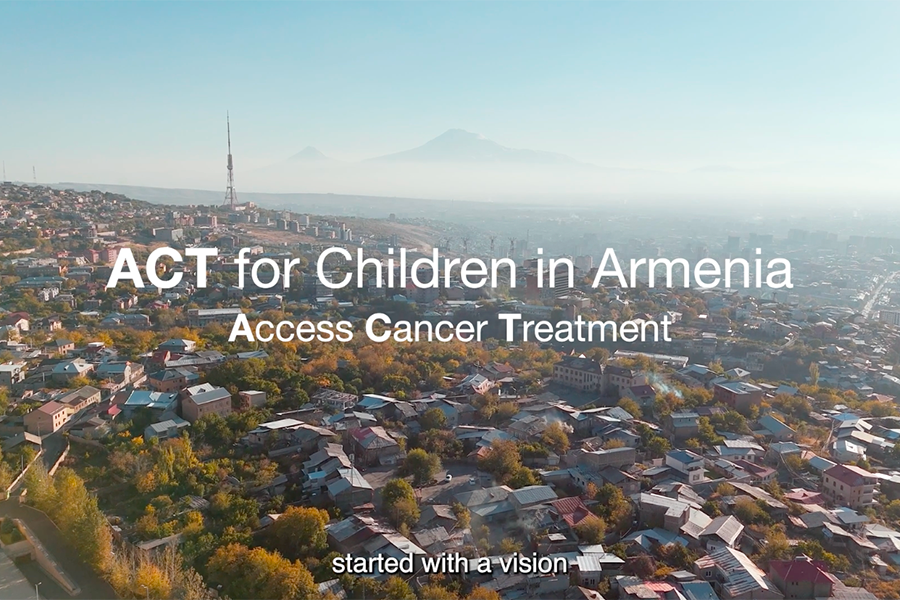
ACT for Children
Servier has joined forces with Childhood Cancer International (CCI), the IDA Foundation, the International Society of Pediatric Oncology (SIOP), Resonance, and World Child Cancer to address disparities in pediatric cancer recovery rates between high-income countries and low- and middle-income countries (LMICs), through the ACT for Children partnership. 80% of children with cancer can be cured when childhood cancer services are accessible, yet only 29% of low-income countries report that cancer medicines are generally available to their populations (compared to 96% of high-income countries3).

Aligned with the WHO CureAll framework, this collaboration aims to transform the landscape of pediatric cancer care in LMICs by providing quality medical care, medications for pediatric acute lymphoblastic leukemia— the most common childhood cancer—and laying the foundation for long-term, sustainable impact. ACT for Children also works closely with the UICC (Union for International Cancer Control)-led Access to Oncology Medicines Coalition, driving a new model of equitable healthcare for children with cancer.
Ten ACT for Children sites have already been set up in 2024 and 2025 in Armenia, El Salvador, Guatemala, Honduras and Indonesia, serving as key hubs for comprehensive care and improvement tracking.
Should you have any doubts or questions
A single link to report any suspicions
[1] The landscape for rare diseases in 2024 – The Lancet Global Health: https://www.thelancet.com/journals/langlo/article/PIIS2214-109X(24)00056-1/fulltext
[2] Adherence to Long-Term Therapies: evidence for action, World Health Organization, 2003
[3] WHO https://www.who.int/news-room/fact-sheets/detail/cancer-in-children