An abrupt onset of illness
Marcus is a 40-year-old Australian who had no symptoms until January 2021, when a seemingly minor accident radically changed the course of his life. That day, he broke his leg in a fall while water skiing. At the hospital, a full scan was performed, as it is the standard procedure in such cases. Healthcare professionals quickly detected a mass in his brain. It was an unexpected but decisive discovery.
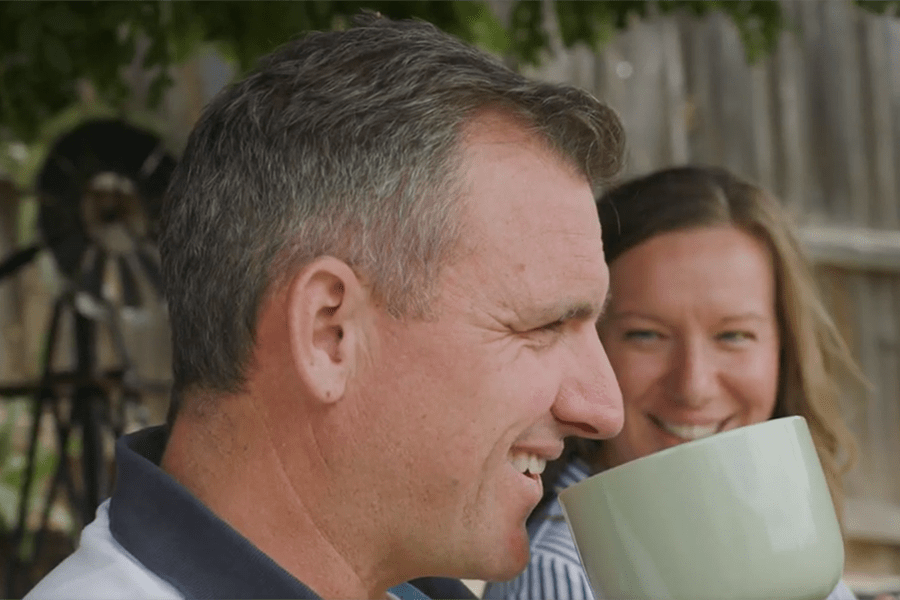
“Without that scan, I never would have known. That scan saved my life.”
Apart from his broken leg, which forced him to stay at home, Marcus’ priority shifted to his brain. Within three days of the scan, he met with a neurosurgeon in Melbourne. “When he saw me coming in on crutches, he thought I had come to the wrong department!”, he jokes. Three months later, he underwent his first surgery, which lasted six hours and removed more than half of the tumor. A second surgery failed due to an epileptic seizure in the operating room. This was followed by 33 sessions of radiotherapy and then chemotherapy, which ended in December 2023.
Read our insight: Glioma, a rare, aggressive brain tumor
Daily life turned upside down
Before his illness, Marcus worked almost every day of the week. Now, he can no longer work. The after-effects are severe: dizziness, balance problems, loss of strength on one side. “I had to relearn how to walk and talk. For the first three months, I could barely speak.” His family became his lifeline. Throughout his journey, his wife was his constant support, his rock. She asked all the questions, checked every decision, and helped him to feel confident.
Marcus learned a major lesson: “Every patient should have a loved one who can defend their interests.” He laments the use of medical jargon and he advocates for systematic psychological support. Today, Marcus is giving back. Through the Bacchus Marsh Cancer Support Yarning Circle he created, an informal group that gathers occasionally, he shares his story with other people going through the same issues. He got the idea after a trip with the Peace of Mind Foundation, during which he met 32 men in the same situation: “Sharing was a breath of fresh air.”

His message is clear: Make more time for personal testimonies and for caregivers.
“They need to be better listened to and given more time and space.”
A holistic care
Marcus received excellent care. Apart from his oncologist, he was surrounded by a psychologist, speech therapist, and an occupational therapist, not to mention support from the Australian national disability insurance system.
Today, the tumor remains stable. His life is shaped by an MRI every six months and a consultation every three months, as well as the ever present “scanner anxiety”.
Patient voices: Living with glioma
Through a collection of personal testimonials, Servier wishes to shine a light on people living with brain tumors, particularly glioma, a rare form of brain cancer.
In this publication, Marcus, Rebecca, Dirk, John, Nick and Ashley tell their stories, share their journeys and describe their fight against disease. Beyond the stories it tells, “Patient voices: Living with glioma” illustrates the Group’s desire to always place patients at the heart of oncology research and development.